
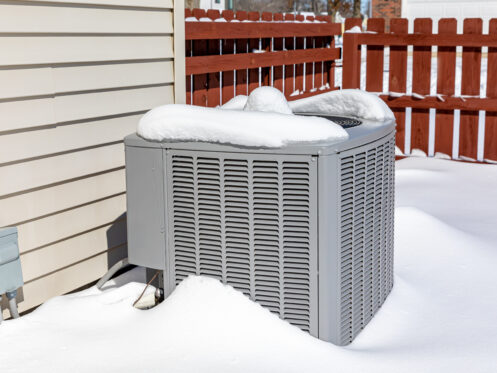
The loss of home heating and hot water can make riding out Northern California’s storm season significantly harder. Preparedness matters, and it’s best to have all your prep work done before our region’s storm season kicks into full gear from December through March. Here is how to prepare your home’s heating and hot water systems before the first atmospheric river unleashes its fury.
General Preparations
Whether you’re talking about a home heating system or a water heater, you want to have all the documentation in a safe place. Flooding and even mudslides can occur during bad weather, so a second-floor location close to the center of the house is best. This reduces the risk that the documentation will be lost or damaged due to flooding. You may need the manual after a storm to troubleshoot problems.
If your system displays error codes, check them during the storm-readiness process. You don’t want to have to figure out what a service code is during the stress of a storm or its aftermath. Also, checking the error code display gives you a chance to deal with maintenance or repair needs before storm season hits.
Locate the labels on your heating and hot water systems, too. Take photos of the labels. These can often make it easier to identify the unit, especially if it’s an older one or the manuals are no longer available. It helps our HVAC technicians and plumbers use pre-storm photos to research units before visiting homes.
Carbon Monoxide and Gas Systems
If your house has a gas-powered heating unit or hot water system, carbon monoxide is a particular risk. This becomes more problematic during storms because sustained strong winds may reduce your system’s ability to vent CO. Consequently, you want to have carbon monoxide detectors on every level of your home.
If you already have CO detectors in place, test them individually. Many people replace the batteries, even if the detector still works, to ensure they have fresh ones.
General Checklist for Heating Systems
First of all, you want to verify that your heating system is operating normally. Turn up the heating system and listen for any unusual sounds. Likewise, verify that a sufficient volume of air is flowing through all the vents.
Regardless of the results of those basic tests, check the air filters on the heating unit. A clogged filter can restrict airflow and cause significant stress on the system, forcing it to work harder. Replace the filters to ensure the system is ready for storm season.
Also, be sure to check the battery in your thermostat. Most modern thermostats have a battery level indicator. You don’t want to be caught off guard by a dead battery in a thermostat while a storm is raging.
If your heating system is in a flood-prone area like a basement, make sure it is elevated. Know the locations of all shutoff valves, too. Maintain a clear path to all equipment. You don’t want to have to fight with items blocking the way if a storm causes an emergency.
Gas Furnaces
This is also a good time to verify that your gas furnace is in good condition if you have one. Make sure the ignition, burners, and blower motor are all operational. Verify that there isn’t any vegetation near the ventilation or intake systems. Confirm that the exterior vents are also in good condition, since damage can trap carbon monoxide in your home.
Electric Furnaces
Locate the electric breaker for the furnace. There are scenarios in which electrical system issues or nearby lightning strikes can cause a breaker to trip during a storm. Properly label the breaker for the furnace. This will allow you to quickly locate it in the event of a trip.
Heat Pumps
A heat pump will have the same electrical considerations as an electric furnace, but there will be additional storm-readiness concerns. Be sure to remove any vegetation or debris from at least 3 feet around the exterior portion of the unit. Make sure the exterior unit’s mounting is also in good shape. Check the brackets for corrosion, as strong winds can push an exterior unit off its block.
Establish a clear path to the exterior unit. You will want to inspect the unit following each storm. Wind debris can easily block 25% of the airflow to a heat pump’s exterior unit, so you want to be able to reach the unit as soon as possible.
This is also a good time to perform a defrost cycle on a cold day during the fall. You can then verify that both the indoor and outdoor components are operating fine. If not, we can have an HVAC technician service the heat pump.
Hot Water Systems
The elevation of a water heater is important if your home is in a flood-prone region, since basements are the most vulnerable locations. Familiarize yourself with post-flood safety protocols as well. If you even suspect contamination in a water heater, turn it off and wait for one of our plumbers to inspect it.
Water Heaters With Tanks
Your water heater’s tank can store usable hot water for at least a couple of days after an outage. Insulating the tank is a good idea, as this will slow heat loss. A water heater set to 120 degrees Fahrenheit should keep water hot for at least 12-24 hours following a loss of gas or electric service. You might be tempted to push it to a higher temperature, but don’t. This makes the system less safe for everyday use, and it also encourages inefficiency.
Gas Hot Water Systems
You will want to verify that the pilot light is in good condition and that all the burners are clean. This should be part of an annual inspection, but recheck it. Likewise, be sure you can locate the pilot light. You may have to relight it following a loss of gas service, and being able to light the pilot yourself can get you back to normal life sooner.
Verify that the vent pipe is secure and free of any potential debris. Check it for possible dents or other damage, too. The pressure relief valve must also be clear.
Electric Water Heaters
Whether you have a tankless or tanked system, you will need to know which breaker connects to your hot water unit. Label it clearly so you can easily locate it for reset following a storm-induced trip.
Environmental Heating & Air Solutions serves households in Benicia, CA and nearby areas. We are a BBB-accredited business and a Lennox Premier Dealer. Our company offers cooling, heating, and plumbing installations, repairs, replacements, upgrades, and maintenance. If you’re worried about having your Benicia home’s heating or hot water system storm-ready, contact Environmental Heating & Air Solutions right away to schedule a checkup.
